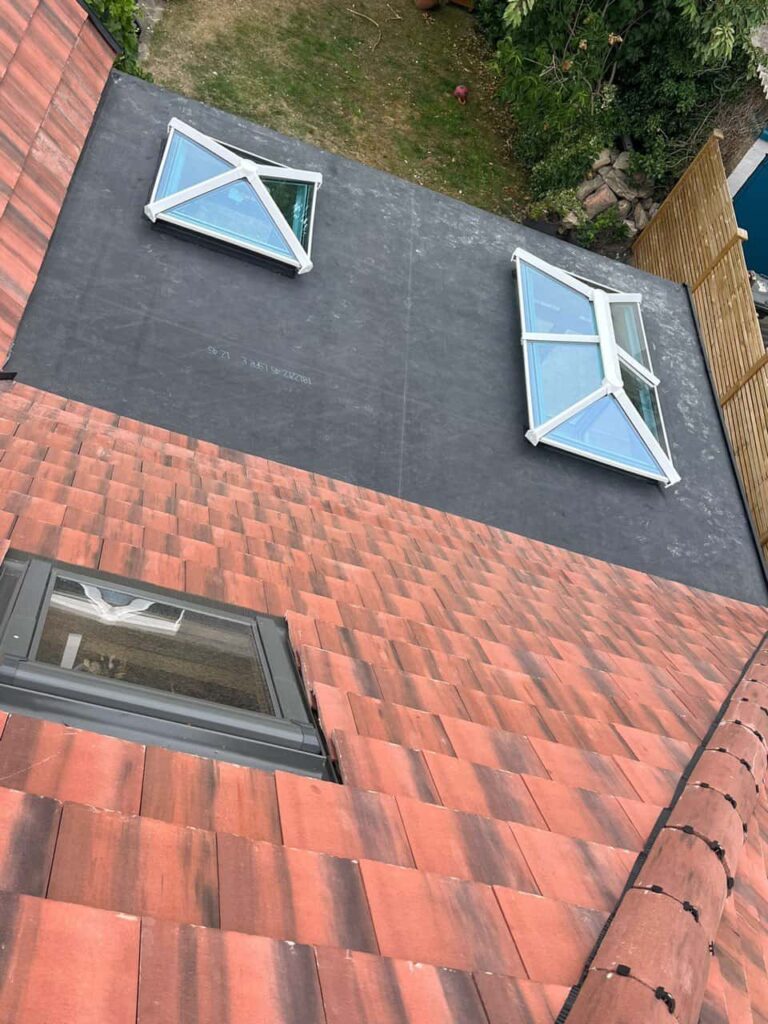
Several faults can cause movement around a ridge. In some cases, the problem is limited to one damaged fixing or section of mortar. In others, loose tiles indicate wider deterioration affecting the ridge system or the roof covering beneath it.
Deteriorated Ridge Mortar
On traditionally installed roofs, ridge tiles may be bedded and pointed with mortar. Years of exposure can cause this material to crack, crumble or separate from the tile surfaces.
Once the mortar loses its bond, ridge tiles may begin to rock or lift. Cracks can also allow water to enter the bedding, accelerating deterioration during repeated wet and cold conditions. Simply applying mortar over the visible crack may not provide a lasting repair if the original bedding has already failed.
Loose or Damaged Mechanical Fixings
Modern ridge systems often use screws, clips, clamps and other mechanical components to secure the tiles. These systems still depend on correct installation and sound supporting materials.
A loose screw, failed clip or damaged seal can reduce the stability of an individual ridge tile. Movement may also develop if components were installed incorrectly or have deteriorated. The complete fixing arrangement should therefore be checked rather than inspecting only the displaced tile.
Wind Uplift and Repeated Weather Exposure
The ridge is particularly exposed because wind passes across both sides of the roof and creates pressure around its highest point. Strong gusts can exploit small weaknesses in mortar, clips or tile fixings.
Damage is not always immediate. Repeated movement during windy weather can gradually enlarge a minor defect until a tile becomes visibly loose. Nearby tiles may then experience additional pressure, allowing the problem to spread along the ridge.
Ageing Tile Fixings Near the Ridge
The upper courses of tiles below the ridge are secured to battens using nails, clips or other fixings. These components can weaken over time, particularly where moisture has affected the surrounding materials.
When a fixing no longer holds correctly, the tile may slip or lift. Because the ridge can partly conceal the top of these tiles, the underlying cause may not be obvious from ground level.
Deteriorated Battens or Supporting Timber
Tile fixings can only remain secure when the timber into which they are fixed is sound. Persistent moisture beneath the roof covering may weaken battens or other supporting materials near the ridge.
Replacing or repositioning a tile without examining its support can leave the actual problem unresolved. Where deterioration is suspected, the affected section may need to be opened carefully so the condition beneath the covering can be assessed.
Thermal Movement
Roofing materials expand and contract as temperatures change. A correctly installed roof accommodates this normal movement, but rigid, poorly positioned or deteriorating materials may eventually crack or loosen.
Thermal movement is particularly relevant along long ridge lines, where small changes across multiple components can place stress on weak mortar joints or unsuitable fixings. The resulting damage may first appear as a fine crack before noticeable tile movement develops.
Poor Previous Repairs
Earlier repair work can fail if loose tiles were merely resealed without removing unstable material or checking the surrounding fixings. Incompatible mortar, inadequate preparation and incorrect mechanical components can also reduce the durability of a repair.
Recurring movement in the same area often indicates that the underlying cause was not fully addressed. A wider inspection can establish whether adjacent tiles, battens or ridge components also require attention.
Impact or Access Damage
Tiles near the ridge can be damaged by falling branches, displaced debris or careless access during other work. Even when a tile remains in position, a cracked nib or weakened fixing can make it more vulnerable to future movement.
An inspection should look for fractures, chips and disturbed neighbouring tiles, not just the most obvious loose section.
Warning Signs to Look For
Loose ridge-area tiles are not always easy to identify safely from the ground. Possible warning signs include:
- A ridge tile that appears raised, uneven or out of alignment
- Cracked or missing mortar along the ridge
- Small pieces of mortar found around the property
- Upper roof tiles that have slipped from their usual position
- Rattling or movement during windy conditions
- Dampness appearing near the highest part of the roof space
- Recurring problems following an earlier repair
Homeowners should avoid climbing onto the roof to investigate. Close inspection of an unstable ridge requires appropriate access and an understanding of how the tiles are fixed.
How Professional Repairs Address the Cause
The correct repair depends on the ridge system and the extent of the deterioration. Work may involve rebedding affected ridge tiles, replacing defective mechanical components, renewing damaged tiles or repairing battens beneath the covering.
A professional roofer should also examine the surrounding area. This helps determine whether the loose tile is an isolated defect or part of a developing problem along the ridge.
Conclusion
Pitched roof tiles can become loose around the ridge because of failed mortar, weakened fixings, wind exposure, thermal movement, damaged battens or unsuitable previous repairs. Identifying the precise cause is essential if the repair is to remain effective.
If you have noticed movement, damaged mortar or displaced tiles near your roof ridge, Portchester Roofing Repairs can assess the affected area and recommend appropriate repairs. Contact our team in Portchester, Hampshire, to arrange a professional roof inspection.
Call us on: 023 8235 6170
Click here to find out more about Portchester Roofing Repairs
Click here to complete our contact form and see how we can help with your roofing needs.