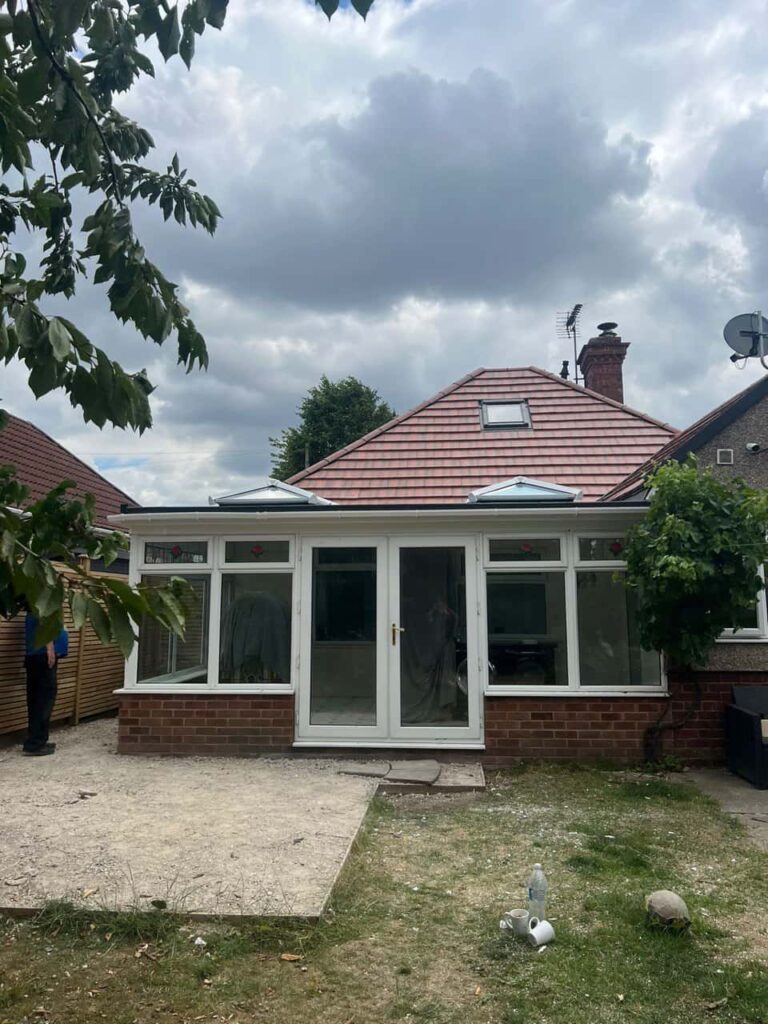
When homeowners look at a roof, the tiles are naturally the first thing they notice. Cracked, slipped or heavily weathered tiles can make it obvious that a roof requires attention. However, the visible covering is only one part of a complete roofing system. What lies beneath the tiles can be equally important when deciding whether repairs remain suitable or a full roof replacement is required.
For homeowners in Portchester, Hampshire, understanding the condition beneath an ageing roof can provide a much clearer picture of its overall health. At Portchester Roofing Repairs, we assess the complete roofing system rather than focusing solely on what can be seen from the outside, helping ensure that any recommended work addresses the underlying condition of the roof.
A Roof Is More Than Its Tiles
Tiles provide the primary external covering, but they work alongside several other components to keep the property protected.
Beneath and around the tiles are elements such as:
- Roofing battens
- Underlay or membrane
- Rafters and structural timbers
- Fixings
- Ventilation details
- Flashing and weatherproof junctions
Each component performs a different function. A roof therefore needs to be considered as an interconnected system rather than simply a layer of tiles.
Why Roofing Underlay Matters
The underlay beneath the tiles provides an important secondary layer of weather protection. It helps manage moisture that may occasionally pass beneath the external covering and supports the overall weather resistance of the roof.
As older underlay deteriorates, it can become:
- Brittle
- Torn
- Damaged around fixings
- Less dependable around vulnerable areas
- Unable to provide consistent secondary protection
Replacing individual tiles above deteriorated underlay may address the visible problem without resolving the weakness underneath.
Battens Need to Provide Reliable Support
Roofing battens provide the framework onto which tiles are fixed. Their condition is therefore fundamental to the security of the roof covering.
Over time, battens can be affected by prolonged moisture exposure or general deterioration. Where they have weakened significantly, tiles may no longer have the dependable support they require.
During roof replacement, removing the existing covering allows these components to be properly assessed rather than assuming everything beneath the tiles remains serviceable.
Hidden Moisture Can Cause Wider Problems
One of the difficulties with roofing deterioration is that moisture does not always remain close to its entry point.
Water entering through a small defect can travel beneath the roof covering and affect surrounding materials before obvious signs appear inside the property.
Possible indications include:
- Damp areas within the loft
- Staining on roof timbers
- Deteriorated underlay
- Moisture around battens
- Internal ceiling marks
By the time these symptoms become noticeable, the original roofing defect may have existed for some time.
The Structural Timbers Also Need Consideration
The supporting roof structure sits beneath the covering, battens and underlay. Although many roof timbers remain in excellent condition for decades, prolonged water penetration can sometimes affect them.
A replacement project provides valuable access to areas that are normally concealed.
Once the existing roof covering has been removed, the underlying structure can be inspected so that any areas requiring attention are identified before the new roofing system is installed.
This is an important part of achieving a dependable long-term result.
Why Repeated Tile Repairs May Not Solve the Problem
Replacing damaged tiles is entirely appropriate when the surrounding roof remains healthy. Problems arise when repeated tile defects are symptoms of more general deterioration underneath.
For example, recurring slipped tiles may be associated with:
- Ageing fixings
- Deteriorating battens
- Movement within surrounding materials
- Wider deterioration across the roof
Continuously replacing individual tiles without investigating why they are becoming loose may fail to address the underlying cause.
Old Underlay Can Influence the Repair-or-Replace Decision
A roof may still look reasonably presentable externally even when the materials beneath it are reaching the end of their useful service.
If the tiles are ageing at the same time as the underlay and battens, homeowners can find themselves dealing with increasingly frequent problems across different areas.
At this stage, full replacement can provide the opportunity to renew several parts of the roofing system together rather than continuing with isolated repairs.
Roof Replacement Allows a Complete Assessment
One of the major advantages of full replacement is that the existing tiles are removed, exposing the construction beneath them.
This allows roofing professionals to assess:
The underlay
Its condition can be examined and a suitable new membrane installed as part of the replacement system.
The battens
Existing battens can be inspected and renewed as required to provide dependable support for the new covering.
The roof structure
Previously concealed timbers can be checked for signs of deterioration.
Vulnerable junctions
Areas around chimneys, valleys and other roof details can be carefully incorporated into the new weatherproofing system.
This comprehensive approach is very different from simply placing new materials over unidentified problems.
Why Correct Preparation Is Essential
A new roof will only perform as well as the preparation beneath it allows.
Installing attractive new tiles does little to improve long-term reliability if important underlying problems have been ignored. Proper roof replacement therefore involves carefully preparing the structure before the new covering is completed.
Quality preparation helps provide:
- Secure support for roofing materials
- Consistent weather protection
- Reliable fixing points
- Effective moisture management
- Better long-term performance
The parts homeowners rarely see can therefore have a significant influence on the lifespan of the finished roof.
Not Every Roof Needs Complete Replacement
Discovering an issue beneath the tiles does not automatically mean that an entire roof needs replacing.
Where deterioration is localised and the remainder of the roofing system remains sound, professional repairs may still provide an effective solution.
Replacement becomes more relevant where there is a combination of factors such as:
- Widespread tile deterioration
- Ageing or damaged underlay
- Poor battens across larger areas
- Recurring water ingress
- Numerous previous repairs
- Problems affecting several parts of the roof
A thorough assessment helps establish the extent of the deterioration before any decision is made.
Why Professional Assessment Is Important
Many of the components discussed above cannot be properly evaluated from ground level. Even an apparently straightforward leak can have a more complicated cause than homeowners initially expect.
Professional roofers look beyond the obvious symptom to determine:
- Where water is entering
- How far deterioration extends
- Whether surrounding materials remain sound
- Whether previous repairs are performing correctly
- Whether repair or replacement provides the more appropriate solution
This avoids making decisions based solely on the appearance of the external tiles.
Replacement Roofing in Portchester
At Portchester Roofing Repairs, we provide professional roofing services throughout Portchester, Hampshire, with an emphasis on identifying the actual condition of the roofing system.
Where replacement is appropriate, attention is given not only to the new roof covering but also to the important components beneath it. Careful inspection and preparation help create a complete roofing system capable of providing dependable protection for years to come.
If your roof is ageing, experiencing recurring leaks or requiring increasingly frequent repairs, a professional assessment can establish whether the problem is confined to the visible covering or extends further beneath the tiles.
Conclusion
The condition of a roof cannot always be judged by looking at its tiles. Underlay, battens, structural timbers and other concealed components all contribute to the performance of the complete roofing system. When these elements deteriorate alongside an ageing roof covering, replacing individual tiles may no longer address the underlying problem.
A properly planned roof replacement provides the opportunity to expose, inspect and appropriately prepare the areas that are normally hidden before installing the new roofing materials.
For homeowners in Portchester, Hampshire, Portchester Roofing Repairs can assess the complete condition of an existing roof and determine whether professional repairs or full replacement offer the most suitable long-term solution. By paying careful attention to what lies beneath the tiles, the finished roof can provide dependable protection rather than simply improving what is visible from the outside.
Call us on: 023 8235 6170
Click here to find out more about Portchester Roofing Repairs
Click here to complete our contact form and see how we can help with your roofing needs.